Electrical
- Pack voltage
- 51.2 V nominal · 16S LiFePO4
- Rail
- 57.0 V regulated
- Connector
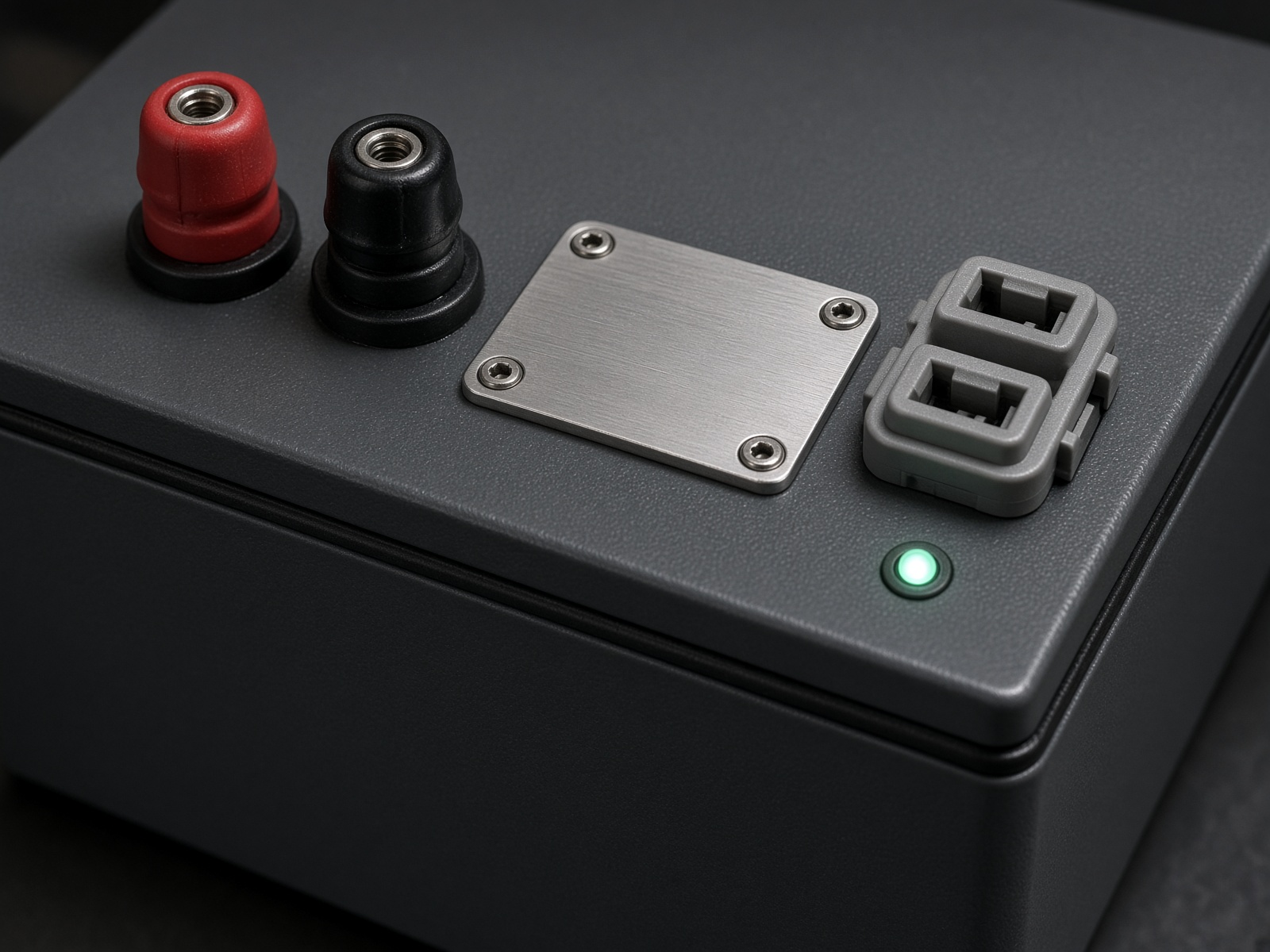
- 5.5 × 2.1 mm barrel into Gen 3 router
- Dish link
- Proprietary PoE, router to dish
- Array
- 2 × 220 W N-type TOPCon
- Usable energy
- 4.61 kWh at 90% DoD
- MPPT
- 150/35
Accessory · Starlink Standard
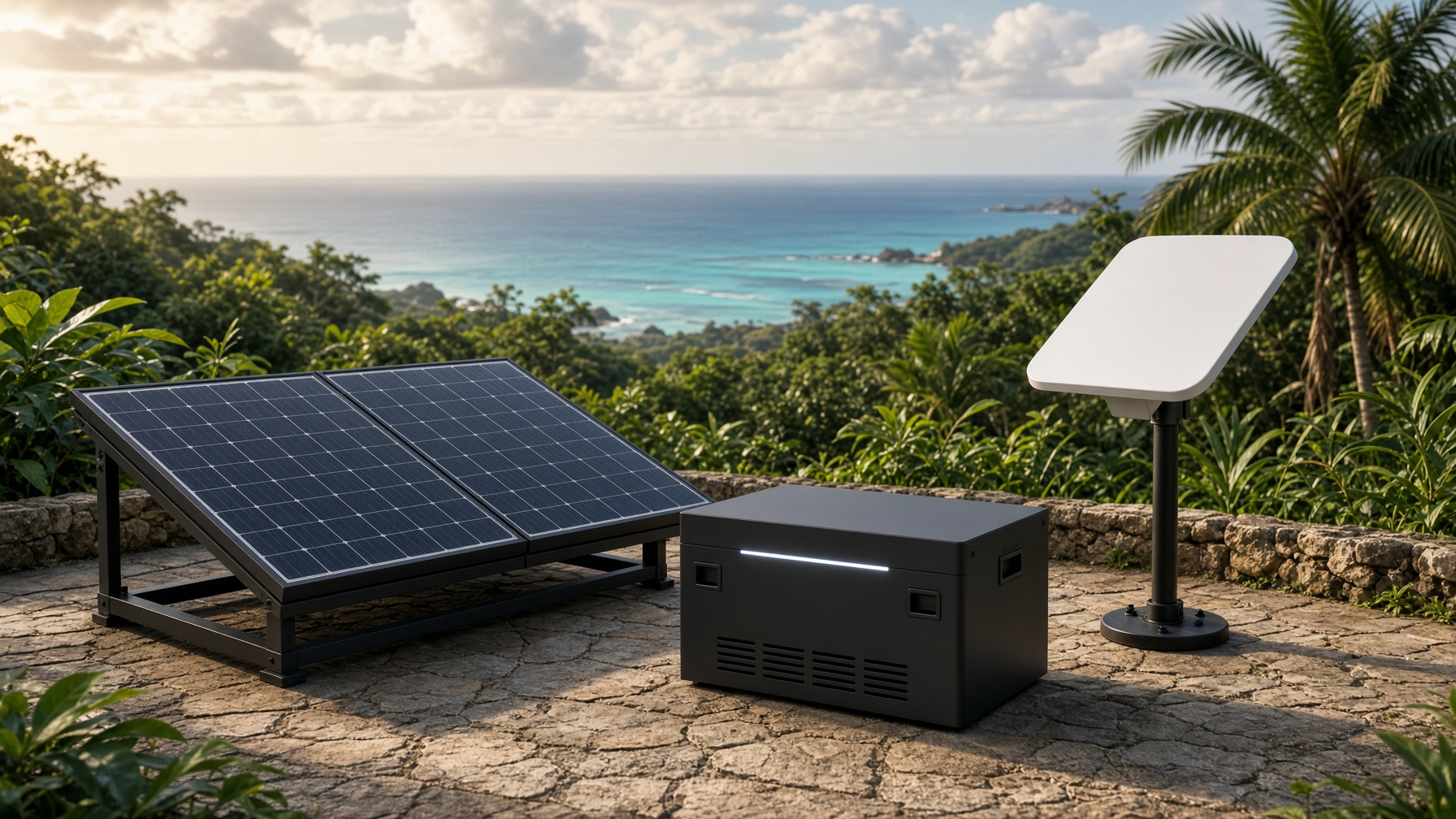
A 48-volt LiFePO4 pack and N-type array that feed the Gen 3 router directly. No inverter. No wall brick. About fifteen percent of the energy stays in the battery instead of becoming heat.
01 · Kits
All three skip the AC brick. Pick a climate and a duty cycle — the energy day below updates live.
Always-On · Caribbean · Open sky. Holds through the night with margin.
02 · Energy day
Cosine sun, heat derate, MPPT and wiring losses, then a regulated 57 V feed into the Gen 3 barrel jack. Starlink nameplate is 75–100 W; this climate uses a field load of 60 W.
into the pack
at the rail
over 48 h
load 63 W
3.84 kWh
vs inverter + brick
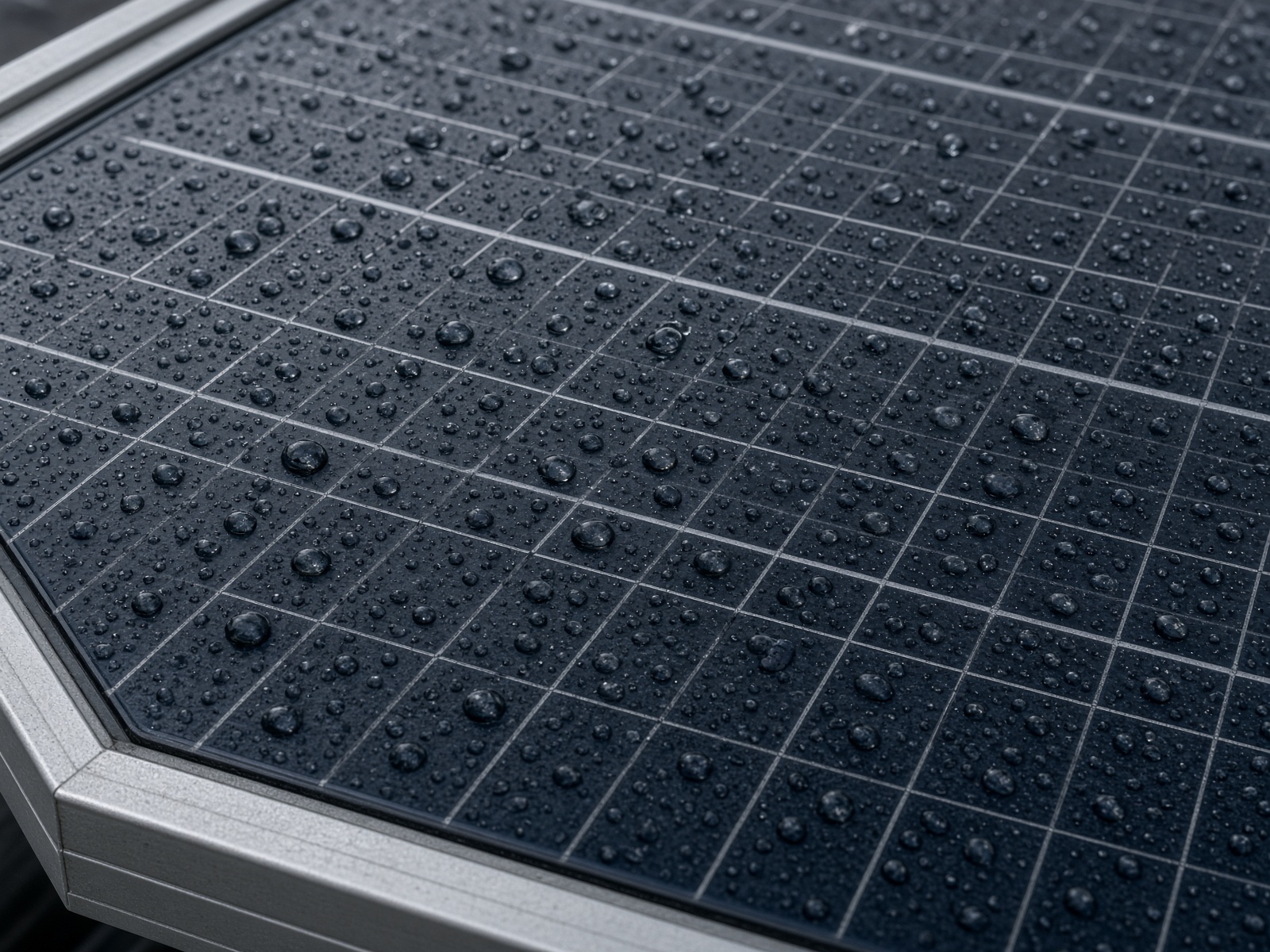
Heat derates the array. No snow melt. Fit a Type 2 SPD — afternoon cells are violent.
03 · System
The Gen 3 router wants 57 volts on a 5.5 × 2.1 mm barrel. A 16S LiFePO4 pack already sits in that neighborhood, so HelioDock regulates instead of inverting. Path efficiency 96% versus about 84% through a sine inverter and the stock brick.
Stage
Isolated buck-boost holds 57.0 V ±0.5 V into the Gen 3 router barrel (5.5 × 2.1 mm). Boot inrush ~160 W for a minute; continuous headroom is 200–300 W depending on kit.
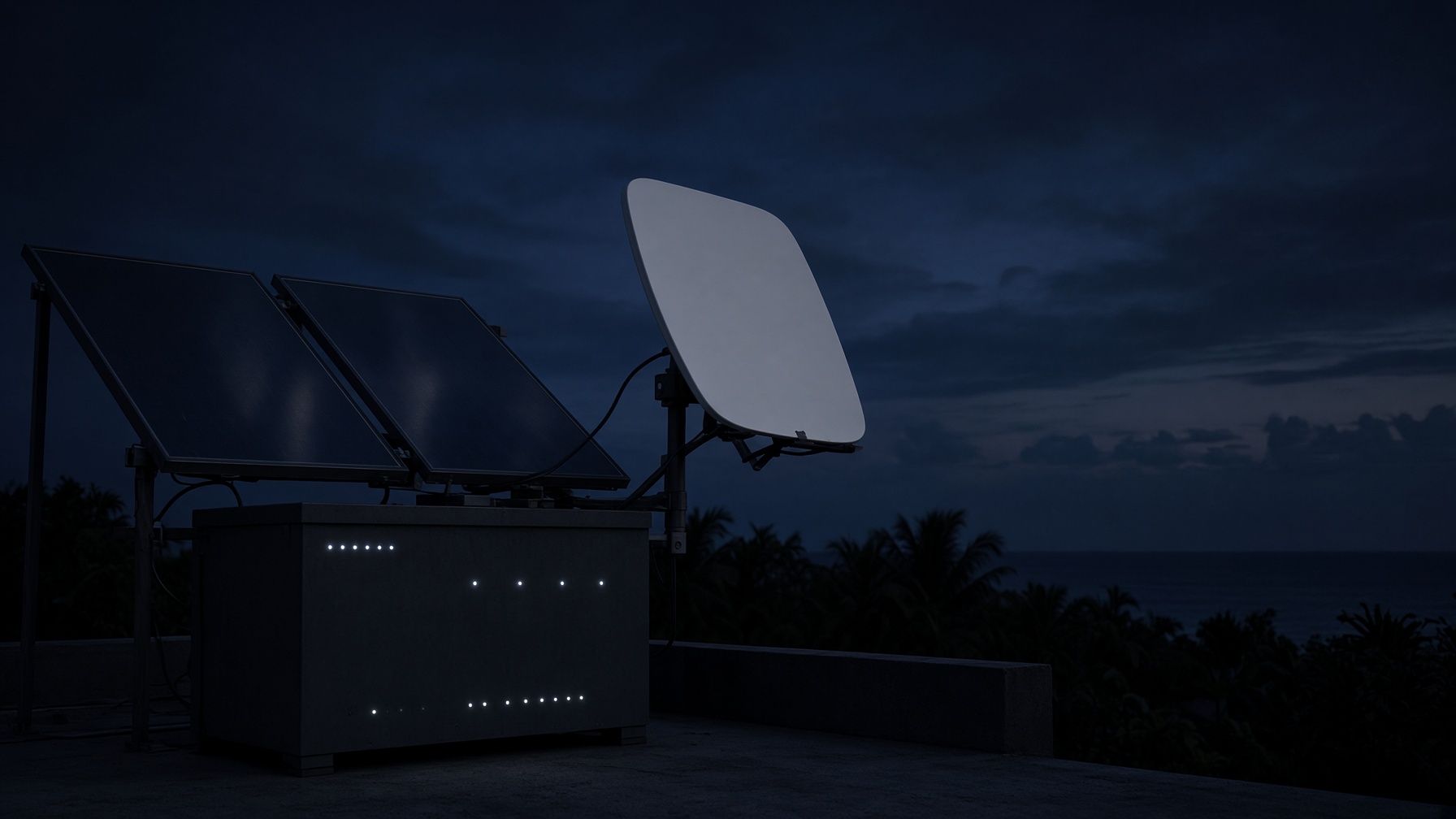
Shade the pack. Never a sealed box in the sun. 50 °C charge cut is the safety, ventilation is the habit. Fold the array when the watch is posted.
04 · Spec
Hardware estimate $2,890 USD, unpacked. Local freight, racking labour, and earthing are on top. Compatible with Starlink Standard · Gen 3 / 4X — not a Starlink product.
| Item | Spec | Qty |
|---|---|---|
N-type TOPCon module 220 W · 30 V Vmp · MC4 | 220 W · 30 V Vmp · MC4 | 2 |
LiFePO4 pack 16S · 51.2 V · 100 Ah · 5.12 kWh | 16S · 51.2 V · 100 Ah · 5.12 kWh | 1 |
MPPT 150/35 · 48 V battery | 150/35 · 48 V battery | 1 |
57 V buck-boost 200 W isolated · barrel 5.5×2.1 | 200 W isolated · barrel 5.5×2.1 | 1 |
BMS 16S · Bluetooth · 50 °C charge cut | 16S · Bluetooth · 50 °C charge cut | 1 |
Type 2 SPD PV + DC bus | PV + DC bus | 1 |
PV wire + MC4 6 mm² · 12 m | 6 mm² · 12 m | 1 |
Battery cable 25 mm² · ANL 125 A fuse | 25 mm² · ANL 125 A fuse | 1 |
DC breaker 32 A double-pole | 32 A double-pole | 1 |
Enclosure IP65 aluminum · vented shade box | IP65 aluminum · vented shade box | 1 |
Array mount 15° tilt · quick-release pins | 15° tilt · quick-release pins | 1 |